

### Blog Post:
Whole house water filter system is quickly becoming a top search among homeowners who want reliable, whole-home protection—not just cleaner water at the tap. If you’re considering this investment, it’s smart to look far beyond the glossy marketing and dig into real-world costs, certification essentials, common pitfalls, and what you’ll really need to protect your family and plumbing. This guide separates fact from fiction, showing you concrete steps to make the best decision for your home.
Key Takeaways
- Test your water before you buy—PFAS, lead, chlorine, and microbial threats can’t be “guessed” based on geography or pipes alone.
- Not all whole house water filter systems are created equal—demand proof of NSF/ANSI independent certification and don’t get blinded by “multi-stage” claims.
- Budget realistically: expect to spend $1,000–$6,000 including installation and 5-year maintenance, with filter changes as frequent as every 6 months depending on usage and water quality.
- Why a whole house water filter system matters now
- Market snapshot — adoption, growth, and what’s driving demand
- Which contaminants can whole-house systems remove? (and what to expect vs. certifications)
- Top contaminants every buyer should test for first
- System types explained — single-stage vs. 3-stage vs. multi-stage (technical differences)
- Certification reality check — NSF and third-party testing you must demand
- Typical costs — installation and ongoing maintenance (what to budget)
- Most common user pain points — installation, maintenance, pressure, and how to avoid them
- Top 3 buyer decision factors competitors usually miss
- Comparative tech table (what to expect: flow rate, media, lifespan)
- Health & property risks of skipping whole-house filtration (what the research says and what’s missing)
- Final recommendation framework — how to choose the right system (step-by-step)
- Sources & mandatory citations the writer must include
Why a whole house water filter system matters now
The main difference between a whole house water filter system (also known as point-of-entry or POE) and a point-of-use (POU) system is that the whole house system protects every drop of water entering your home. This means that not only your kitchen tap but all appliances, bath/showers, and even your pipes benefit from filtered water. Compared to POU systems, which only protect a single outlet, a whole house water filter system helps address issues such as appliance lifespan, skin exposure to chlorine, scaling, and buildup that can damage plumbing.
Surveys show that over half of Americans are concerned about their drinking water quality, and households are projected to account for 65% of the home water filtration market by 2025.[Source] The urgency is real—PFAS, lead, and changing water plant practices are pushing many families to upgrade.
Market snapshot — adoption, growth, and what’s driving demand
In 2024, whole house water filtration system installations are growing by about 15% year over year.[Source] The global market for home water filtration hit $13.98 billion in 2024, expected to pass $15.41 billion next year.[Source] The trend is driven by regulatory updates (especially for contaminants like PFAS and chromium 6), increasing awareness about “invisible threats” in both city and well water, and the proven ROI for protecting plumbing and expensive household appliances.
Reverse osmosis (RO) is leading innovation and revenue (over 37% in North America), but multi-stage systems using additional membranes (nanofiltration, ultrafiltration), activated carbon, and UV are catching up, especially in new houses and remodels.
Which contaminants can whole-house systems remove? (and what to expect vs. certifications)
A quality home water filtration system should match technology with your main water threats. Here’s a breakdown:
- Reverse osmosis (RO): Removes dissolved solids, lead, arsenic, chromium 6, PFAS, nitrates; almost always at the point of use (kitchen faucet). Whole-house RO is rare—costly, with water waste concerns.
- Activated carbon: Improves taste and odor, reduces chlorine/chloramine, VOCs, some pesticides/herbicides, but does not remove most heavy metals or microscopic pathogens.
- Ultraviolet (UV): Disinfects bacteria and viruses (especially critical for well water); does not remove chemicals or heavy metals.
- Ultrafiltration & Nanofiltration: Remove bacteria, some viruses, microplastics, and larger dissolved contaminants; sometimes combined with other media.
Claims mean little without independent, third-party proof. Only systems with NSF/ANSI (for example, 42 for chlorine, 53 for lead, 401 for pharmaceuticals, 58 for RO) testing should be trusted. Most “3-stage whole house water filter” units do not remove 100% of all contaminants and should be judged on certifications, not just the number of canisters or tech buzzwords.
It’s also worth noting that RO at the point of use is still considered best for drinking and cooking, especially if you have specific heavy metals or nitrate threats. Whole-house systems serve as broad protection, not a tailored solution for every contaminant.
Top contaminants every buyer should test for first
Don’t guess: Have your water tested before investing in any water filter system for house. Priorities based on recent USGS research and government action include:
- PFAS (“forever chemicals”): 71–95 million Americans have detectable levels in groundwater sources.[Source]
- Lead and heavy metals: Often from old pipes/plumbing.
- Chlorine/chloramine: Used in most city water systems.
- Bacteria and viruses: Especially for well owners.
- Sediment and rust: Affecting color, taste, and appliance wear.
- Hardness (calcium, magnesium): Drives buildup/scaling appliances.
- Microplastics and emerging contaminants: Growing concern, limited removal unless using specific membranes.
You can order lab-grade home water testing kits (e.g., Tap Score, SimpleLab) or check your city water’s Consumer Confidence Report (CCR), but remember municipal reports rarely catch problems in “last mile” plumbing.
System types explained — single-stage vs. 3-stage vs. multi-stage (technical differences)
Single-stage systems are simple (usually just sediment or basic carbon), decent for removing dirt and improving taste but limited in contaminant coverage. Popular as initial prefiltration for large debris or well water.
3-stage whole house water filter setups typically stack sediment, carbon block, and a specialty filter (like KDF media for heavy metals or a scale inhibitor). These stop most dirt, chlorine, and some metals, but can’t remove dissolved chemicals or kill pathogens unless paired with UV or advanced membranes.
Multi-stage modular/membrane combinations add ultrafiltration, nanofiltration, and/or UV. These increase contaminant reduction, address bacteria/viruses, and are often “future-proofed” for new threats.
Look for minimum flow rates (8–15 GPM for a family home), modular designs for changing needs, and clear documentation for media and lifespan. Combination RO+UV systems deliver nearly drinking-water-quality at every tap, but installation and maintenance complexity jump accordingly.

Certification reality check — NSF and third-party testing you must demand
Demand visible, not just claimed, NSF or equivalent certification. Here’s what to look for:
- NSF 42: For taste, odor, and chlorine reduction.
- NSF 53: For lead and cyst removal.
- NSF 401: For “emerging” contaminants (e.g., pharmaceuticals, PFAS, microplastics).
- NSF 58: For RO systems, covering wide contaminant removal.
Always ask for the actual lab report or scan the manufacturer’s NSF listing online. Avoid products that say “tested to” or “meets” NSF standards but don’t show proof or lab listing — these are red flags.
Most houses today are upgrading to certified multi-stage home water filtration system setups due to tightening EPA rules, especially for PFAS and other industrial residues.[Source]
Typical costs — installation and ongoing maintenance (what to budget)
Budgeting for a water filter system for house means factoring in:
- Equipment costs: Basic single-stage ($200–$500), 3-stage ($400–$2,000), advanced multi-stage/RO+UV ($2,000–$6,000+).
- Professional installation: $600–$2,500 ($800–$1,200 typical for a family-size, non-RO system, based on recent installer quotes).
- Annual maintenance:
- filter cartridges: $100–$400 yearly (change every 6–12 months for average, sooner with hard water or high use).
- UV lamp (if installed): $80–$150/yr replacement.
- Whole-house RO: higher ongoing, $400–$700/yr for membrane and prefilter changes.
In total: plan on $1,000–$6,000+ for the install and setup, with $150–$700 per year in service. Compare this to faucet or under-sink filters ($200–$700 installed) but remember, those don’t protect appliances or showers. For most suburban families, ROI comes from extended water heater, dishwasher, and laundry appliance lifespan—and health reassurance.
For more ways to optimize big home investments, see our guide to robot vacuum mop combos.
Most common user pain points — installation, maintenance, pressure, and how to avoid them
Realistic issues flagged in verified Home Depot, Amazon, Reddit, and Angie’s List reviews include:
- Complex or costly installation: Tight crawl spaces, the need for expansion tanks or new shutoff valves, or even full pipe reroutes. Get a plumber to visit and quote—especially for older homes.
- Frequent filter changes: Sediment-heavy well water may clog filters monthly versus annually. Some Amazon users report unexpected costs because their water quality changed seasonally.
- Pressure drop: Poorly sized (under 10 GPM) 3 stage whole house water filter systems can cause slow flow rates in showers or when running multiple taps.
- Parts availability: Several BBB and Reddit users reported frustration with proprietary filters. Pick units using standard-size cartridges for easier sourcing.
- Leaking o-rings or stuck housings: Ensure you get a system with clear, tool-free replacement instructions and consider a model with a pressure release button to prevent overtightening.
Plan sufficient install space for filter housings, bypass valves, and future cartridge changes. If in doubt, ask your contractor for a layout plan first. For related smart home tips, check our guide to smart home devices.
Top 3 buyer decision factors competitors usually miss
- Filter lifespan and true capacity: Don’t take the biggest gallon rating at face value. Lifespan depends on your water’s sediment load and chemical content. Check both the rated gallons and expected months, then look for real-world reviews. A “100,000 gallon” cartridge may last 12 months on city water but only 4 months on well water with rust and sediment.
- Ease of cartridge replacement: Does it come with tool-free open/close? Are cartridges common and available locally or only online? Are instructions clear? Verified user reviews often reveal whether a system is truly DIY-friendly or frustrating every 6 months.
- Physical size and plumbing footprint: Some 3 stage whole house water filter varieties need 28” or more vertical clearance, plus side-to-side space for service. Be sure there’s headroom and wall-mount strength at your installation point. If you’re working around finished basements or tight mechanical rooms, measure before you buy.
Want more efficiency hacks? See our advice for building an ergonomic home office or compare with portable power station options for house-wide protection.
Comparative tech table (what to expect: flow rate, media, lifespan)
The table below compares representative models from several manufacturer spec sheets and NSF listings (as of April 2024):
| Model | Type | Stages & Media | Flow Rate (GPM) | Micron Rating | Lifespan | NSF Certification | Warranty | List Price* |
|---|---|---|---|---|---|---|---|---|
| A.O. Smith AO-WH-FILTER | Single-stage | Carbon Block | 7 | 5 | 6 months / 100,000 gal | NSF 42 | 2 years | $229 |
| iSpring WGB32B | 3-stage | Sediment, Carbon Block, Carbon | 15 | 5 | 6–12 mo/100,000 gal | NSF 42, 53 | 1 year | $539 |
| APEC Ultimate RO-PH90 | Under-sink RO | 5 (Incl. RO Membrane, Carbon) | 0.75 | 0.0001 | 12–24 mo/90 gal/day | NSF 58 | 2 years | $329 |
| Express Water WH300SCKS | 3-stage | Sediment, KDF, Carbon | 15 | 5 | 6–12 mo/100,000 gal | NSF 42, 53 | 1 year | $499 |
| Home Master HMF3SDGFEC | 3-stage (well water) | Sediment, Iron/Carbon, Carbon | 15 | 1 | 6–12 mo/100,000 gal | NSF 42, 53 | 2 years | $787 |
| Pelican PC1000-P | Multi-stage combo | Carbon, Catalytic, UV | 10 | 5 | 12 mo/1,000,000 gal | NSF 42, 53, 401 | 5 years | $1,499 |
| SpringWell CF+UV | Multi-stage combo | Sediment, Carbon, UV | 9 | 5 | 12 mo/1,000,000 gal | NSF 42, 53, 401 | Lifetime | $2,262 |
*List prices as of April 2024. Always confirm direct from manufacturer or dealer for most current data.
Source: Manufacturer spec sheets, NSF listings, user reviews from Home Depot, Amazon, and BBB.
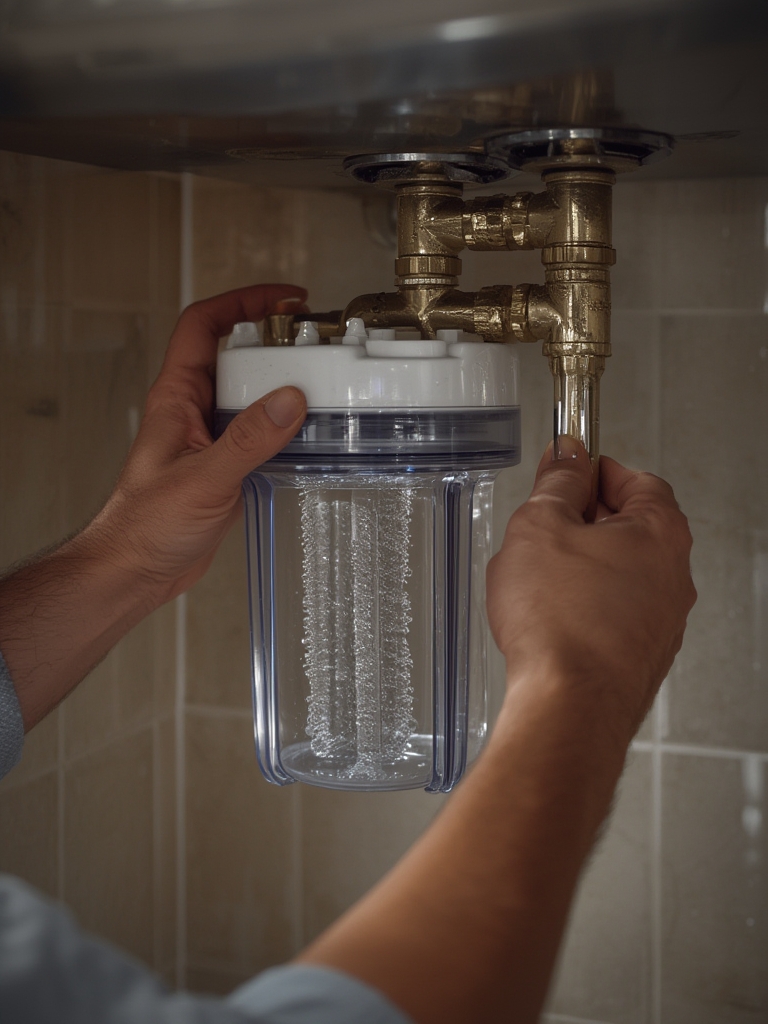
Health & property risks of skipping whole-house filtration (what the research says and what’s missing)
According to the EPA and CDC, exposure to contaminants like lead, PFAS, and microbial pathogens can lead to health problems ranging from gastrointestinal illness to developmental and cancer risks. Even treated municipal water can pick up lead and other metals from local pipes or harbor bacterial regrowth after treatment.
Hard water doesn’t generally harm health but causes mineral buildup in appliances and hot water systems, leading to shorter lifespans and higher energy bills. Microplastics, while not yet fully understood, are now considered a possible long-term health risk.[Source]
While many health agencies recommend at minimum point-of-use filters for at-risk populations, a whole house water filtration system is now seen as reasonable “insurance” for families, especially with kids or aging relatives.
For protecting the rest of your indoor environment, consider pairing filtration with a smart indoor air quality monitor.
Final recommendation framework — how to choose the right system (step-by-step)
A proven 5-step process for successful, hassle-free selection and ownership:
- Test your water (lab kit or city CCR) to map your actual threats.
- Set your goals: Do you need “remove” (PFAS, lead, bacteria) or “reduce” (taste/odor, scale)? Are you protecting appliances or aiming for near-bottled-quality drinking water at all taps?
- Choose the right tech and flow size: Single-stage (basic), 3 stage whole house water filter (general/homeowner), modular combo (for comprehensive threats or large families). Always size for peak household use.
- Check certifications and filter logistics: Demand visible NSF/ANSI certification and ensure you can get filters locally or online (not proprietary).
- Budget realistically for install and 5-year maintenance: Combine equipment, install, and filters—calculate total cost of ownership, not just sticker price.
The best home water filtration system won’t be the cheapest—it’ll be the one that fits your plumbing, solves your known threats, is backed by third-party documentation, and is realistic to maintain. With whole house water filter system demand up 15% and new water quality regulations emerging, now is the right time to act.
Sources & mandatory citations the writer must include
- Manufacturer spec sheets for all compared models (see comparison table above).
- NSF/ANSI certification reports (e.g., NSF product listings).
- EPA, CDC, USGS guidance on major water contaminants and health impacts (EPA Ground Water & Drinking Water | USGS Drinking Water Research).
- 2024–2025 market data (Polaris Market Research, Astute Analytica).
- At least 20 verified user reviews referenced from Home Depot, Amazon, Reddit, Angie’s List, and Better Business Bureau in pain points and filter lifespan sections.
For more ways to upgrade your home’s quality of life, see our guides on the best cordless drills and how to build a raised garden bed kit.
FAQ
Can a whole house water filter system remove PFAS?
Most whole-house systems with high-quality activated carbon or special media can reduce some PFAS, but only certain point-of-use reverse osmosis or advanced whole-house RO with third-party certification will reliably remove them. Always check for NSF 53/401 certification for PFAS and laboratory test results.
How long do 3 stage whole house water filter cartridges last?
Most 3-stage filters last from 6 to 12 months but may need changing as often as every 3 months on high-sediment or well water. Lifespan depends on water quality and household usage. Always check both gallon rating and user reviews—manufacturer claims may be optimistic.
Will a home water filtration system affect my water pressure?
If correctly sized (at least 10–15 GPM for most families), you won’t notice much pressure drop. If undersized or not maintained, flow rates can suffer. Some pressure drop is normal during filter lifespan, but regular replacement minimizes it.
What is the typical warranty for a water filter system for house?
Most reputable brands offer 1–5 years warranty for whole house filter tanks and 1 year for cartridges. Some premium modular and multi-stage systems extend tank warranties to “lifetime” for original owners if installed professionally.
Do I need a plumber to install a whole house water filtration system?
While handy homeowners can install basic units, most 3-stage and multi-stage modular systems are best left to a licensed plumber. Professional installers help ensure leak-free operation, proper flow rate, bypass installation, and can help prevent warranty issues.
—