

### Blog Post:
Blackout curtains for bedroom are not just another home decor trend; they’re a practical, science-backed tool to measurably improve sleep, privacy, and even energy efficiency. If you’re searching for actionable buying and installation advice—especially with so many conflicting claims about “100% blackout,” “thermal insulated,” and “room darkening”—this guide will break down what works, what doesn’t, and how real-world results depend on more than just the fabric label.
Key Takeaways
- “Blackout” fabric alone rarely achieves complete darkness—installation, sealing, and hardware are just as critical as material when it comes to real sleep and privacy results.
- Light leakage through edge gaps (often 10–50 lux) can still disrupt melatonin production and sleep, especially for children and shift workers, even if you use premium blackout curtains for bedroom windows.
- Thermal insulated and noise reducing blackout curtains offer added benefits, but most marketing claims (noise reduction, 100% blackout, quick payback) are exaggerated without specific installation upgrades.
- Why blackout curtains for bedroom are more than a decor choice
- How light levels translate to sleep biology — what the numbers mean
- Light-blocking capacity — standard blackout vs. 100% blackout vs. room darkening
- Realistic dark-room expectations — lux and installation matter more than fabric label
- Noise-reducing blackout curtains — what they can and cannot do
- Thermal insulated blackout curtains — energy-saving claims and the truth on payback
- Common verified customer complaints and how to avoid them
- Underserved buyer concerns for room darkening curtains 84 inch (three big blind spots)
- Latest design innovations in blackout curtains for bedrooms (2024)
- Practical buying & installation checklist
- Quick decision guide — which option to choose
- FAQ and myth-busting
Why blackout curtains for bedroom are more than a decor choice
The science is clear: controlling light in your bedroom isn’t just an aesthetic upgrade—it’s one of the most effective interventions for better sleep, health, and privacy. In 2024, the largest NIH-backed sleep study to date—tracking 47,765 women—demonstrated that any indoor light at night significantly increased the risk of trouble falling and staying asleep, and led to non-restorative sleep. Melatonin, your body’s sleep hormone, can be suppressed at thresholds as low as 5–10 lux—levels easily breached by typical streetlights or hallway light leaking past even high-end blackout curtains.
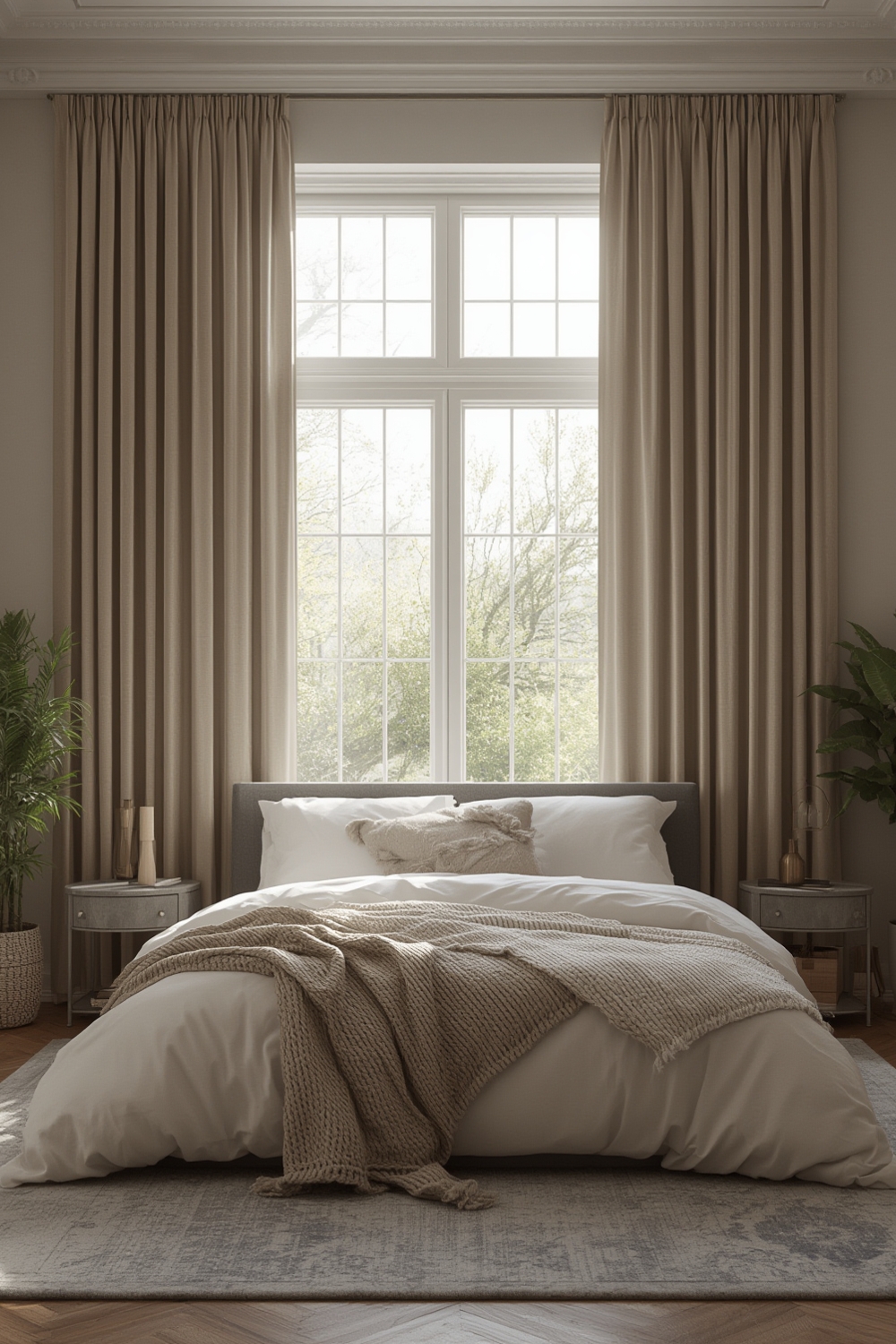
Expert consensus now recommends blackout curtains for bedroom windows as a first-line defense—practical not only for privacy, but also for reducing biological disruptions like heart rate elevation and impaired insulin responses [source] [2024 NIH Study]. Families, shift workers, and anyone living in urban or suburban settings with outdoor or neighbor light exposure will see real, measurable improvement from tackling light intrusion at the window.
How light levels translate to sleep biology — what the numbers mean
Understanding “lux” is critical: even low light can disrupt your body’s clock and sleep hormones. Peer-reviewed research has found that:
- Melatonin production is suppressed by as much as 50% at just 200 lux (Gooley, 2011), a level easily matched by indirect outdoor or hallway lighting at night.
- Children are especially sensitive—showing around 78% suppression at only 5–40 lux. Typical blackout curtain edge gaps can allow this much light into a bedroom window.
- The effective threshold for circadian rhythm disruption is often cited between 5–10 lux—lower than what most streetlights or urban window gaps provide.
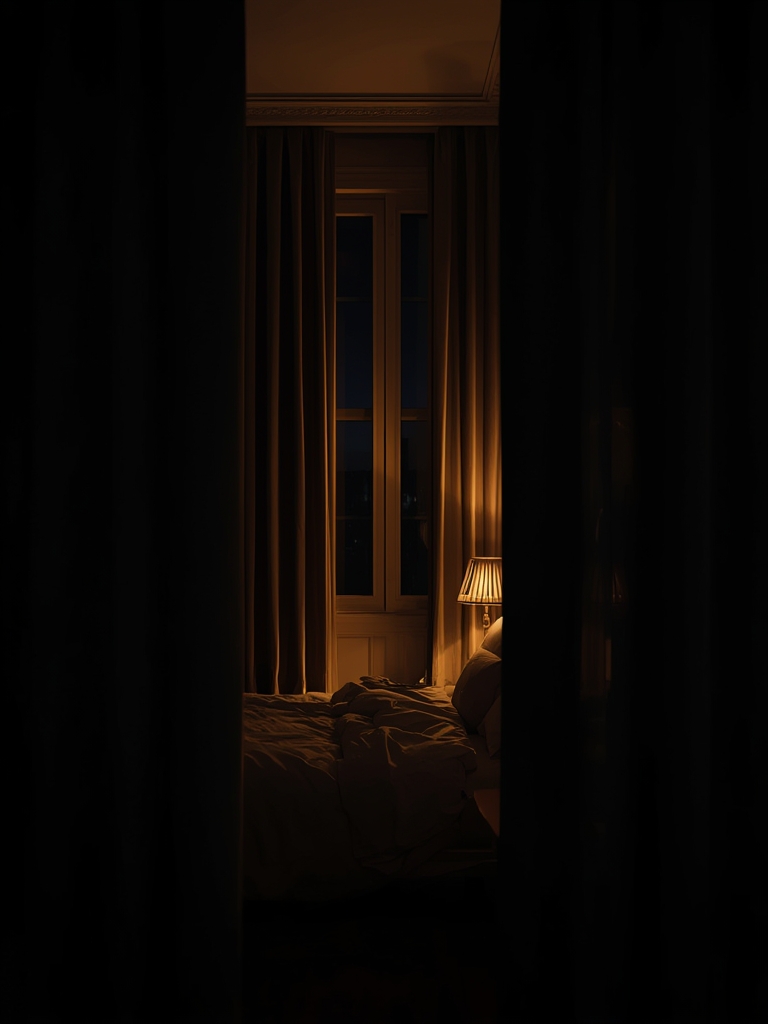
That means “near darkness”—not just “dim”—should be your goal. If you are a shift worker or have children, achieving single-digit lux levels at bed height is especially important. Remember, a standard blackout curtain blocks 85–99% through the fabric, but if installation leaves side or top gaps, your real exposure could still be well above these risk thresholds.
If you want to learn about optimizing your entire smart bedroom environment, check out our guide to LED strip lights for bedrooms.
Light-blocking capacity — standard blackout vs. 100% blackout vs. room darkening (technical differences)
Most buyers see three marketing terms: blackout curtains, 100 blackout curtains for living room, and room darkening curtains 84 inch. Here’s what each actually means in practice—according to independent measurements and current research [source]:
| Type | Fabric Light Block | Real-World Lux (Rod-Hung) | Notes |
|---|---|---|---|
| Standard Blackout | 85–99% | 10–50 lux (typically 15–40 lux in urban settings) | Edge gaps common. Often well above melatonin suppression thresholds (5–10 lux) |
| 100% Blackout | 99–100% (aims for 0 lux at bed height) |
0–5 lux (if properly sealed with track system) | Not achievable with standard rods or rings; requires track/side/overlap sealing |
| Room Darkening Curtains 84 inch | ~50–85% | 20–60+ lux | Best for mild privacy and aesthetic update—not adequate for true sleep health |
The bottom line: Rod-hung installations—even for “100 blackout curtains for living room” or bedroom—almost always leave light gaps that undermine the performance claims. Sealed track systems are the only way to approach real 0 lux blackout results.
Realistic dark-room expectations — lux and installation matter more than fabric label
Many buyers think “blackout” means pitch-black. But real-life results are all about hardware, placement, and overlap. For example:
- Rod-hung blackout curtains—even premium models—frequently leave side/top edge gaps, with light intrusion measured at 10–50 lux in urban homes (15–40 lux is typical if streetlights or neighbors are near).
- Mounting the curtain several inches above and outside the window trim, and extending the width, reduces—but rarely eliminates—these leaks.
- Even “room darkening curtains 84 inch” with good fabric allow substantial light when not combined with a liner or secondary blind—especially relevant for shift workers needing deep daytime darkness.
Want to get close to “true blackout”? Combine thick fabric with a layered window setup and opt for side channels or magnet/seal kits designed for blackout. This is especially crucial if you are sensitive to sleep disruptions or live in a brightly-lit urban area. Interested in further reducing distractions in your living space? Explore clutter-free solutions in our foldable wall mounted desk guide.
Noise-reducing blackout curtains — what they can and cannot do
If you see “noise reducing blackout curtains” in marketing copy, treat the claim with healthy skepticism. There are no peer-reviewed, brand-verified numbers for decibel reduction in consumer curtains as of 2024. Dense or layered blackout fabrics will audibly muffle outside noise—industry estimates (not verified in published research) infer reductions around 10–20 dB in ideal setups [source]. However, this kind of performance depends on how well the curtains seal and how much mass/density the material has. Don’t expect foam-wall or studio-level outcomes; instead, use them for mild to moderate noise reduction—keeping urban bedroom and living room spaces more peaceful, but not silent.
Thermal insulated blackout curtains — energy-saving claims and the truth on payback
Thermal insulated blackout curtains add value by reducing heat transfer—keeping warm air in during winter and blocking outside heat in summer. Research confirms they can improve your home’s energy efficiency and reduce HVAC use, but there is no verified brand-to-brand savings data as of 2024. Some literature (not independently validated) suggests a typical payback of 1–3 years, assuming $20–$50/month in seasonal energy bill savings—a highly variable figure depending on window area and how well you seal the setup [source]. If your primary goal is energy savings, prioritize well-fitted, multi-layer, thermal insulated blackout curtains over thin or short models.
Need further energy-saving ideas? See our electric heated blanket throw guide.
Common verified customer complaints and how to avoid them
Patterns from verified reviews show recurring frustrations with thermal insulated blackout curtains and 100 blackout curtains for living room spaces. Here’s what stands out:
- Edge light gaps: The #1 complaint. Urban tests consistently show room lux levels jumping 10–40 lux due to poor sealing—even with premium blackout products.
- Rod-hung installation challenges: Even a 1-inch mismeasurement or underlap will let in significant light. Getting mounting width, drop, and overlap wrong are routine issues.
- Not achieving complete blocking in bright areas: Many buyers are surprised that expensive curtains still leak light during the day or if the window faces bright urban environments.
How to avoid these issues: Always measure window width/height carefully, mount rods wider and higher than the frame, and consider additional liners or magnetic or velcro edge strips. For living rooms, if you need real privacy during both day and night, use overlapping panels or a double-layer system. Looking for ways to improve sleep quality further? Our air purifier for bedroom guide can help.
Underserved buyer concerns for room darkening curtains 84 inch (three big blind spots)
Most “room darkening curtains 84 inch” reviews skip major downsides critical for families, shift workers, and health-focused buyers:
- Edge-gap light leakage at 84″ length: Curtains sold at this common drop length often float above floor or window sill, dramatically increasing side/light gap leakage. Urban bedroom light can easily reach 15–40 lux despite “99%” fabric, undermining sleep improvement goals [source].
- Children’s sleep sensitivity: Kids can experience 78% melatonin suppression at exposures as low as 5–40 lux. Any edge gap—no matter how small—has outsized impact for families with young children.
- Shift worker daytime sleep needs: Daytime outside light can reach 200–1000+ lux. Standard rod-hung, 84-inch curtains simply do not provide complete daytime darkness, making sealed systems essential for restorative day sleep.
For families with children: Always prioritize full-length, floor-pooling curtain panels and sealed installation techniques—children’s sleep biology leaves no margin for error when it comes to residual light.
Latest design innovations in blackout curtains for bedrooms (2024)
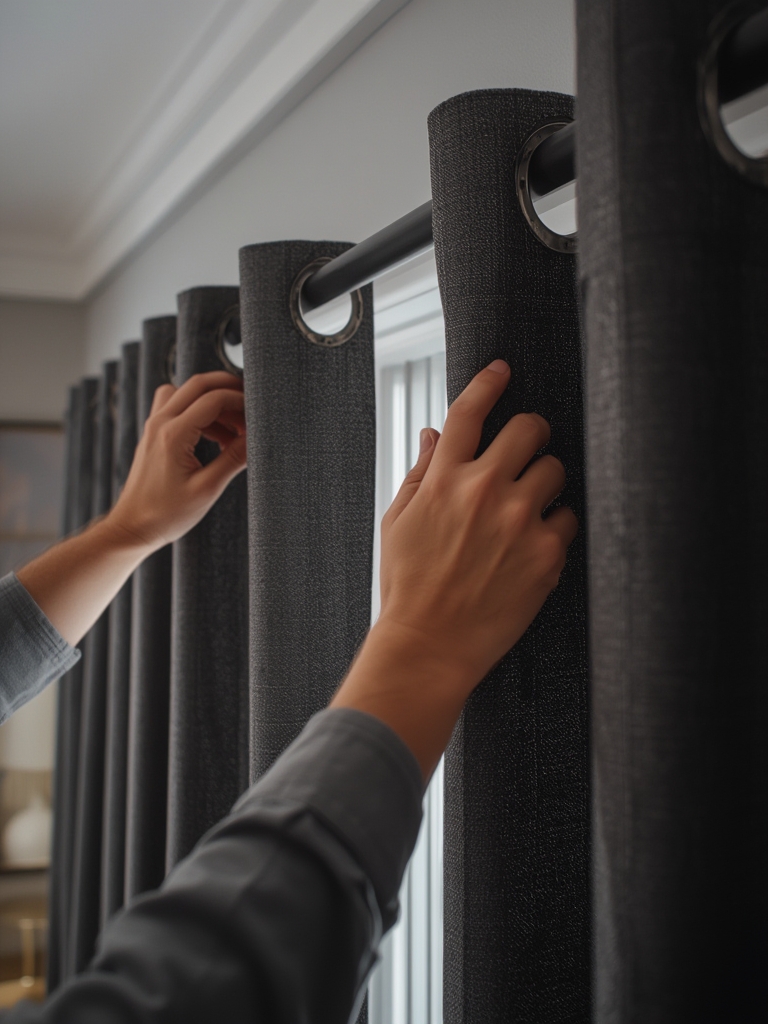
The most important advances in 2024 are less about fabric technology and more about how you install blackout curtains for bedroom windows.
- High-opacity, multi-layered fabrics are now standard at the upper end—think dense triple-weaves and thermal linings promising near-100% block [source].
- Sealed track systems and magnetized side channels are the only real breakthrough for achieving consistent “0 lux” results in practical use. Rod-hung solutions, even at premium prices, still lose to track shades or channel kits.
- Smart home integration is limited—most 2024 products lack built-in automation or advanced remote control. The rare exceptions are costly and mostly target custom installs.
Looking for more ways to upgrade your smart home comfort? Explore our 2026 smart home devices guide.
Practical buying & installation checklist
To maximize blackout curtain performance, follow these step-by-step recommendations:
- Measure generously: Add 8–12 inches to the width and 4–6 inches above window trim to ensure overhang and minimize edge leaks.
- Choose tracks over rods if possible: Track shades with side channels or magnetic strips limit side/top light leaks. Sealed installs (not rod-hung) are the only realistic route to approach “0 lux.”
- Combine layers for best results: Use a thermal insulated blackout curtain plus an opaque roller shade, or double up panels.
- Use floor-pooling panels for bedrooms: Avoid standard 84” drop if there’s a gap to the floor, as this can drive up light intrusion.
- Install magnetic or velcro edge strips: These inexpensive add-ons seal gaps for rod-hung curtains and are highly effective, especially for bedrooms facing night lighting.
- For living rooms: Use 100 blackout curtains for living room spaces if daytime TV viewing or privacy is critical, but expect to supplement with blinds or linings for true darkness.
For shift workers: Prioritize sealed track + blackout + thermal layering for day sleep needs. Combine with noise reducing blackout curtains if traffic or neighbor noise is also a problem.
Quick decision guide — which option to choose
Not sure which curtain setup fits your lifestyle or sleep profile? Use this table for practical, prescriptive recommendations:
| User Need | Best Solution | Why |
|---|---|---|
| Bedroom, urban/suburban | Blackout curtains for bedroom + side/magnetic seals or sealed track system |
Brings room lux near 5–10 threshold for melatonin protection; manage edge gaps |
| Shift worker/daytime sleep | Sealed motorized track + blackout curtain + roller shade layer | Blocks 200–1000+ lux; only solution for restorative day sleep |
| Family with children | Blackout curtains + sealed side/top (avoid 84″ gap) | Children’s melatonin suppression at 5–40 lux means full sealing is a must |
| Living room/media | 100 blackout curtains for living room + additional liner or double curtain layer |
Reduces glare and provides privacy; expect some edge leakage unless sealed |
Still debating between room darkening curtains 84 inch and sealed blackout? Go beyond fabric marketing—focus on your space’s layout, edge gaps, and how sensitive you (or your kids) are to small amounts of light at night.
FAQ and myth-busting
Can blackout curtains for bedroom really achieve 100% darkness?
It’s possible—but only with sealed track systems or specialty shades. Rod-hung curtains rarely achieve below 10–20 lux after dark due to side/top edge gaps.
Are noise reducing blackout curtains as effective as foam panels?
No. While they muffle outdoor noise (sometimes 10–20 dB reduction in best cases, though not research-verified), they can’t match true acoustic panels for heavy soundproofing.
Will thermal insulated blackout curtains pay for themselves quickly on energy savings?
Results vary. Literature suggests a 1–3 year payback if you save $20–$50/month, but there’s no brand-specific, independently validated data as of 2024. Good sealing and layering matter more than the label.
Is “room darkening curtains 84 inch” enough for children or shift workers?
Usually not. Even small edge gaps at this length can raise bedroom light to 15–40 lux, which is enough to suppress melatonin in sensitive populations. Sealed or floor-total overlap is best.
What’s the #1 action to get better blackout results?
Seal the edges. No matter the fabric, edge gaps are the top cause of “leaky” blackout and lost sleep benefits in most homes.
—